

16 min read · Updated: 2026-11-28
Choose a plush dog bed with a removable, machine-washable cover, durable fabric and filling that can be cleaned or replaced separately. Check the care label before buying, then match the bed’s dimensions to your dog’s usual sleeping position. A washable cover and simple construction make routine cleanup easier without sacrificing softness.
Plush beds vary in pile, filling and shape, and those choices affect both comfort and upkeep. A fluffy surface may feel inviting, but a dense fabric with sturdy seams can be more practical when fur, dirt or damp paws are regular concerns.
Compare the whole bed rather than relying on the word “washable.” Look for clear care instructions, a cover that removes without a struggle, and a size that lets your dog stretch or curl comfortably.
- Choose soft, supportive plush with durable seams and a pile that suits your cleaning routine.
- Check separate care instructions for the cover and inner cushion before buying.
- Measure your dog in their usual sleeping position and compare usable interior space.
- Match fabric, shape and construction to your dog’s habits and the bed’s location.
What Makes a Plush Dog Bed Comfortable
Softness Without Losing Support
A comfortable plush bed feels soft on top but still supports your dog’s body when they settle down. Press the sleeping surface with your hand and check whether the filling springs back rather than staying flattened or shifting into clumps. If your dog is heavier, a thin layer of loose fluff may not provide an even resting surface.
Pile length changes how a bed feels and how easily you can remove debris. Short, dense plush is often simpler to brush or vacuum than long fibers that can trap fur and crumbs. A deeper pile may suit a dog that likes to burrow, but check whether the fabric can withstand regular cleaning.
Comfort also depends on how the bed is put together, not just the softness of its fabric. Look for evenly filled areas and seams that do not leave hard ridges beneath your dog. If you run a pet-bed shop, a marketing agency directory may help you find specialist support for reaching customers.
- Press the surface to check recovery.
- Compare pile length with your cleaning routine.
- Check for firm seams beneath the sleeping area.
Warmth and Sleeping Style
Choose plush thickness with your dog’s usual sleeping position and room temperature in mind. Dogs that curl tightly may enjoy a cushioned rim to rest against, while sprawlers often need a broad, flat area without bulky bolsters. A very thick bed can feel warm, so consider whether your dog already seeks cool floors.
Notice where your dog chooses to sleep before deciding on a shape. A pet that tucks into corners may appreciate a raised edge, while one that stretches across the floor may prefer a simple rectangular cushion. The bed should let your dog change position without falling onto a hard surface.
A plush bed should be cozy without making routine care difficult. Deeply tufted surfaces and narrow creases can collect loose fur, so inspect how the sleeping area meets the sides. Smooth transitions and accessible seams make it easier to brush away hair and spot marks before they become harder to remove.
Check the Fabric, Filling and Construction
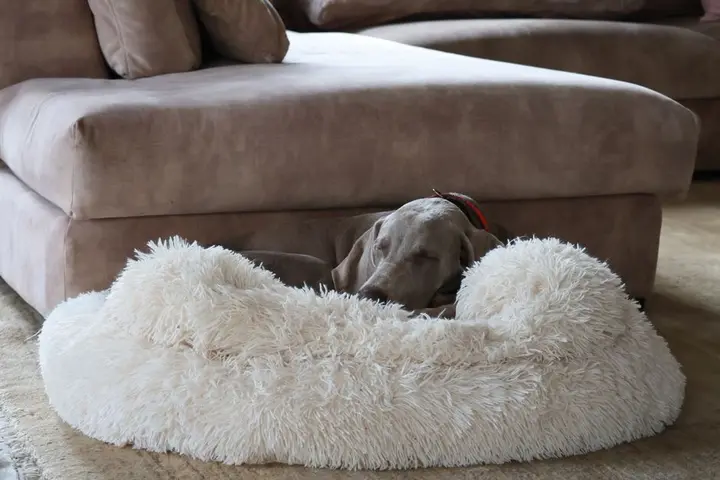
Read the Fabric Care Label
Check the care label before buying, because “easy to clean” can mean different things from one bed to another. Confirm whether the cover is machine washable, which wash conditions it allows, and whether it must air-dry. A guest post marketplace may help a small retailer explore editorial opportunities beyond product listings.
Fabric choice affects how much routine cleaning a bed needs. Tightly woven or short-pile surfaces are generally easier to brush than long, loose fibers that hold fur. If your dog often comes in with damp paws, look for clear cleaning directions and avoid assuming that a plush finish can tolerate frequent washing.
Inspect the fabric where your dog is most likely to rub, knead or scratch. A bed with a soft top and sturdy side panels may balance comfort with wear resistance. Check that the surface does not shed readily when rubbed, and read product care guidance for any limits on detergents or drying.
Look Inside the Bed
Find out whether the filling sits in one insert or is sewn into the whole bed. A removable inner cushion can be easier to air and clean separately, while an integrated design may require washing the complete bed. Either construction can work, provided the care instructions explain how to clean it safely.
Filling that shifts into lumps can leave uncomfortable hollows and make the bed harder to refresh. Check for compartments or quilting that help keep material distributed, and read whether the insert can be reshaped after washing. A cover that fits closely also helps prevent the filling from bunching at the edges.
Seams and fasteners affect how well a bed stands up to cleaning. Examine stitching for gaps, loose threads or exposed zipper teeth that could snag fabric. A zipper tucked beneath a protective flap is less likely to rub against your dog, while a sturdy closure makes it easier to remove the cover for washing.
- Check whether filling is removable.
- Look for even distribution and secure stitching.
- Inspect zipper placement and protection.
Compare Removable Covers and Washability
Choose a Practical Cover
A removable cover makes targeted cleaning easier, especially when the inner cushion should not be washed. Before ordering, check that the cover opens wide enough to remove without forcing the filling through a narrow gap. Retailers promoting a new bed range may use a service to buy guest posts online, while keeping product advice useful to shoppers.
- ☐ Confirm the cover comes off fully.
- ☐ Read its washing and drying instructions.
- ☐ Check whether replacement covers are available.
- ☐ Make sure the closure is protected.
Compare how the cover closes and whether its fastener is protected from paws and fur. A zipper with a fabric flap can reduce snagging, while a simple envelope closure may be easier to remove but can shift during use. Read the care label for washing and drying instructions before deciding which design suits your routine.
A spare cover can keep the bed in use while the other one is being cleaned, if the maker offers compatible replacements. Check the exact model and size before purchasing, since covers are not always interchangeable across similar-looking beds. If replacements are unavailable, consider whether the complete bed can be cleaned and dried conveniently.
| Option | Cleaning approach | What to check |
|---|---|---|
| Removable cover | Wash the cover separately | Closure and care label |
| Integrated cover | Clean the whole bed | Bed size and drying needs |
| Spot-cleanable fabric | Treat small marks locally | Approved cleaning method |
| Washable inner cushion | Clean insert apart from cover | Insert care instructions |
Understand Washing Limits
A care label is more useful than a broad claim that a bed is washable. It should distinguish between cleaning the cover and washing the insert, and explain whether either part needs special handling. If instructions are unclear, ask the seller before washing, since unsuitable heat or agitation can distort fabric and filling.
Consider how much space the bed will take up when wet and how long its components may need to dry. Thick inserts can hold moisture, so they may need a well-ventilated place and extra time before reuse. Never put a damp cushion back inside its cover, because trapped moisture can leave the bed unpleasant.
For everyday marks, spot-cleaning the affected area can reduce unnecessary full washes, provided the care label permits it. Blot rather than scrub to avoid driving dirt deeper into plush fibers, then let the fabric dry completely. Regularly shaking out loose fur also helps keep the bed fresher between deeper cleans.
- Read instructions for cover and insert separately.
- Allow washed parts to dry fully.
- Spot-clean only when the label allows it.
Check the sleeping area rather than the bed’s outside dimensions, especially when the design has thick bolsters.
Match the Bed to Your Dog’s Size and Habits

Measure for Comfortable Rest
Measure your dog while they are relaxed in their usual sleeping position, then compare that space with the bed’s usable interior. Include room for stretching if your dog sprawls, rather than choosing by body weight alone. A small pet-bed business planning an announcement may find cheap press release distribution useful for sharing news with relevant outlets.
- Measure your dog in a natural resting position.
- Compare interior space, not only exterior dimensions.
- Choose extra room for dogs that stretch out.
Check the sleeping area rather than the bed’s outside dimensions, especially when the design has thick bolsters. Raised sides can take up space and make the interior feel smaller than expected. If your dog likes to rest their head on an edge, allow for that preference without making the central cushion cramped.
When your dog is between sizes, consider how they sleep and where the bed will sit. A larger flat cushion gives a sprawler more room, while a compact nest may suit a dog that curls and prefers close sides. Confirm the bed’s dimensions and shape before ordering, since size labels are not consistent across products.
Account for Everyday Habits
Your dog’s daily habits can help identify which bed details matter most. A dog that tracks in dirt may benefit from a removable cover, while one that sheds heavily may be easier to manage on short-pile plush. Match the design to the mess you actually see instead of choosing features you may not use.
Think about whether your dog scratches, circles or burrows before settling. Repeated digging can put strain on seams and closures, so prioritize sturdy construction and check the care guidance for frequent cleaning. If your dog tends to chew bedding, supervise use and follow the maker’s safety guidance rather than assuming any plush bed is chew-resistant.
Finally, consider where the bed will be used and cleaned. A bed that fits its resting spot but cannot be carried easily to the washing area may become inconvenient. Check whether the cover can be removed in place, and make sure there is enough room to dry the cushion fully after cleaning.
- Match fabric to shedding and tracked-in dirt.
- Check seams if your dog paws or circles.
- Plan where washed parts will dry.
Watch for Common Quality and Care Pitfalls
Spot Hard-to-Clean Details
Before buying, check whether seams, deep tufts, or decorative trims can trap fur and dirt. A smooth, simple shape is usually easier to vacuum and wipe than a heavily stitched design. Look closely at the bed’s corners and underside, where loose threads or narrow creases can collect debris and complicate routine cleaning. Retailers can treat white label link building as a separate promotion resource while keeping product care information clear and accurate.
- Read the care label before choosing a bed.
- Check seams, trim, and the underside for dirt-catching details.
- Confirm how the inner cushion can be cleaned.
- Choose a washing and drying routine you can manage.
A plush surface can look soft while hiding a backing that is difficult to dry. Check the care label for washing and drying instructions, and make sure they suit the equipment and space you have. If the whole bed must be washed, consider how you will handle its weight while wet and how long it may take to dry.
Avoid assuming that a removable cover makes every part easy to clean. The inner cushion may still absorb spills, and some fillings are not suitable for machine washing. Ask whether the insert can be spot-cleaned or aired safely, then decide whether that extra care is realistic for your household. A bed is only manageable if its full construction suits your routine.
Check Materials and Fastenings
Inspect zippers and closures before purchase, because a weak fastening can fail when a cover is removed for washing. A zipper should be enclosed or positioned where your dog is unlikely to chew it. If the bed has ties or snaps, check that they are secure and easy to operate without forcing them.
Fabric that pills or sheds can make a bed look worn and leave fibers around your home. Where product details are available, look for clear information about fabric durability and cleaning limits rather than relying on a close-up photograph. Reviews may help reveal whether owners find the cover practical after repeated use, but compare feedback with the care instructions.
A bed that retains a damp smell may need more than a fresh cover wash. Give inserts time to dry completely before putting them back inside, and do not seal a still-damp bed in a cupboard. If a lingering odor remains after appropriate cleaning, check the manufacturer’s guidance before trying strong cleaners that could damage the fabric or irritate your pet.
A Note for Small Pet-Bed Shop Owners

Make Care Details Clear
For a small retailer, clear care information helps shoppers compare plush beds before they buy. State whether the cover comes off, what washing method is allowed, and how the insert should be cleaned. This practical detail can reduce confusion after delivery and help customers choose a bed that fits their household routine.
Use product descriptions to distinguish features that look similar in photographs. Explain whether the plush fabric covers the whole bed, whether the base has a different material, and how the closure works. If the supplier provides care limits, present them plainly rather than suggesting that every part is machine washable.
Retailers who want help placing articles about their products may consider a guest posting service as a separate marketing resource; it does not replace accurate care guidance on a product page. Keep any outside promotion distinct from the information shoppers need to maintain the bed. A useful listing still begins with precise materials, sizing, and washing instructions.
Support Confident Bed Choices
Organize product information so shoppers can compare beds without guessing. A consistent format for fabric, cover construction, available sizes, and care instructions makes differences easier to spot. Include photographs of the bed’s underside and zipper where possible, since these details can influence cleaning and may not appear in a standard front view.
Avoid broad claims such as “easy care” unless the product details support them. Tell customers whether a cover can be washed at home, whether the filling needs spot cleaning, and any limits the maker specifies. When information is missing, ask the supplier rather than filling gaps with assumptions that could lead to damage or disappointment.
Keep customer questions about cleaning in view when updating listings. If buyers regularly ask how to remove the cover or dry the insert, bring those answers into the main description instead of leaving them in a separate message. Clear instructions help shoppers assess ongoing care before purchase and give staff a consistent answer when they need to explain a product.
Simple Ways to Keep a Plush Bed Fresh
Build a Light Care Routine
Remove loose fur before it works into the plush pile by using a vacuum attachment or a lint tool suited to the fabric. Check the care label before using a brush, since vigorous scrubbing can roughen some surfaces. A short, regular pass is easier than waiting until hair and debris are embedded.
Shake out the bed or cover outdoors when the fabric and construction allow it. This can dislodge loose dust between washes, but it does not replace laundering when the label calls for it. Take the chance to inspect seams and closures, and remove any debris caught around the zipper before opening the cover.
Wash the cover when it is visibly soiled or the care instructions recommend cleaning, rather than relying on a fixed schedule that may not fit your dog. Close fastenings first and use only the washing method permitted by the maker. Avoid overloading the machine, because a crowded wash can prevent the cover from rinsing thoroughly.
Dry Every Layer Thoroughly
Dry the cover and inner cushion completely before reassembling the bed. Residual moisture can leave an unpleasant odor and may affect the filling, especially when a thick insert is folded or compressed. Follow the product’s drying directions, and check the center of the cushion rather than judging dryness from its outer surface.
If a spill reaches the insert, blot it promptly with a clean cloth instead of rubbing it deeper into the filling. Use only a cleaning method the manufacturer allows, then leave the cushion in a well-ventilated place to dry. Do not put a damp insert back inside its cover, even if the outside fabric feels dry.
Keep the bed in a spot where air can circulate and where it is easy to notice fresh dirt or dampness. A mat or washable layer beneath the bed may help protect the floor, but it should not trap moisture against the bed’s base. Check under the bed during routine tidying, particularly if it sits close to a wall.
Choose a Bed That Fits Your Home and Routine

Balance Comfort and Upkeep
Choose a plush bed whose care demands match the way your household works. If you can wash covers regularly but cannot handle a bulky insert, prioritize a removable cover and a manageable cushion. If the bed will sit in a busy area, a simpler shape and accessible seams may be more practical than extra decorative details.
- Choosing by size label alone; compare the bed’s measured sleeping area.
- Buying a bulky bed without checking its washing and drying requirements.
- Ignoring placement; leave room to remove, clean, and dry the bed.
Measure the space where the bed will go, then compare it with the bed’s outside dimensions rather than relying only on a size label. Leave room to remove the cover and move the bed for cleaning. A bed wedged between furniture may be difficult to vacuum underneath or carry to the washing area.
Think about how your dog uses the bed as well as how you clean it. A dog that curls up may settle comfortably in a raised edge, while a dog that stretches needs enough clear surface. Check the actual sleeping area inside the outer rim, since plush sides can reduce the space available for resting.
Make the Routine Sustainable
Set up a simple care station with the tools your bed’s fabric permits, such as a suitable vacuum attachment and a clean cloth for spills. Store them near the bed so small tasks are easy to do when you notice fur or dirt. Keep the manufacturer’s care instructions available rather than guessing about washing temperatures or cleaners.
Consider whether you can keep the bed usable while its cover is drying. If not, a second cover may be helpful when the product offers one, but first confirm that it fits the same insert and follows compatible care instructions. Planning for drying time prevents the temptation to put a damp cover back into use.
After purchase, check the bed periodically for loose seams, damaged closures, and filling that has shifted or clumped. Follow the care label when washing, and stop using a bed if damage creates a risk of chewing or swallowed material. A practical choice is one you can keep clean, dry, and in good condition without turning routine care into a burden.
Frequently asked questions
Can I wash a plush dog bed in a washing machine?
Only if the manufacturer’s care instructions allow it. Some beds have removable covers that can be machine-washed, while their inserts need spot cleaning or another method. Check the label for washing and drying directions, and make sure the bed or cover fits comfortably in your machine. Dry every layer fully before reassembling it to help prevent lingering dampness and odor.
How can I remove dog hair from plush fabric?
Start with a vacuum attachment or lint tool that is suitable for the fabric, and work gently to avoid roughening the pile. A regular quick clean can keep loose hair from becoming embedded. Check the care label before using a stiff brush or any cleaning product, since some materials need gentler handling. Cleaning the surrounding floor also helps keep loose fur from returning to the bed.
What should I do if the inner cushion gets wet?
Blot the affected area with a clean cloth rather than rubbing, which can push moisture farther into the filling. Follow the maker’s guidance for cleaning the insert, then let it dry fully in a well-ventilated place. Check the center of the cushion, not just its surface. Do not put it back in the cover or let your dog use it while it is still damp.
Is a removable cover enough to make a bed easy to maintain?
Not necessarily. The cover may be simple to wash, but the inner cushion can still absorb spills, collect fur, or require special care. Before buying, find out how to clean both layers and whether the insert can dry in a reasonable space. Also check that the cover is straightforward to remove and replace, since a difficult closure can make routine washing less convenient.
Make Cleaning Part of the Choice
A plush dog bed is easier to live with when its fabric, seams, cover, and insert all suit the care you can realistically provide. Check the instructions before buying, compare the usable sleeping area with your dog’s habits, and account for drying time as well as washing. Straightforward construction and clear product details can matter as much as a soft surface.
Before choosing, measure the spot where the bed will sit and review how every layer is cleaned. Then select an option whose size and care requirements fit your home, and keep the label’s instructions handy for routine upkeep. Removing loose fur regularly and drying washed parts thoroughly can help the bed stay comfortable without making cleaning a larger task than necessary.


