
Best dog beds for large dogs: sizing and selection guide

Quick answer: best dog beds for large dogs
The best dog beds for large dogs give your dog enough room to stretch or curl up, with a shape and support level suited to how they sleep. Measure your dog in their usual resting position, check the bed’s usable sleep area, and confirm the cover-care instructions and construction details on the product listing.
A bed labeled “large” may not provide enough room for every large dog. Sizes and usable sleep areas can differ between products, so compare the listed dimensions with your dog’s resting position rather than relying on the size label alone.
Think about how your dog sleeps, where the bed will go, and how you’ll clean it. The right fit is a practical match for your dog and home—not a promise to prevent or treat a health problem.
Key points
- Measure your dog in a natural resting position.
- Compare usable sleep space, not just the size label.
- Choose a shape that suits your dog’s sleep style.
- Check care instructions and construction details before buying.
In this guide
- How to choose best large dog beds by measuring
- What “best big dog beds” most likely means for materials
- How to choose the best dog bed for large dogs by sleep style
- Check cleaning details before choosing a large-dog bed
- Avoid common sizing and placement mistakes
- Use this comparison to identify which details to check for your dog’s sleep style.
- Frequently asked questions
How to choose best large dog beds by measuring
Measure your dog’s resting space before choosing among large dog beds. When your dog is relaxed, measure from nose to tail and from the front of the chest to the back paws; allow extra room if they stretch out. Compare those measurements with the bed’s usable sleeping surface, not only its outside dimensions, since raised sides or bolsters can reduce the flat area.
If your dog usually curls up, a round or oval bed may fit their resting posture, but check that the inner space is adequate. If they sprawl, look for a broad, open surface. A size chart is a starting point, not a universal standard, so check the maker’s current listing for dimensions and sizing guidance before deciding.

What “best big dog beds” most likely means for materials
“Best big dog beds” most likely means a bed sized for a larger dog, but the phrase does not specify a particular material or construction. For a useful comparison, check what the listing says about the sleeping surface, filling, base, and cover rather than assuming a material from a product photo or title.
Consider your home and your dog’s habits: a bed near a drafty door may call for different comfort features than one in a warm room, while frequent cleaning makes cover-care instructions especially relevant. Look for clear information about whether the cover can be removed, how it should be washed, and whether the maker gives care limits. No material or filling is right for every dog, and product descriptions should be verified on the current listing.
How to choose the best dog bed for large dogs by sleep style
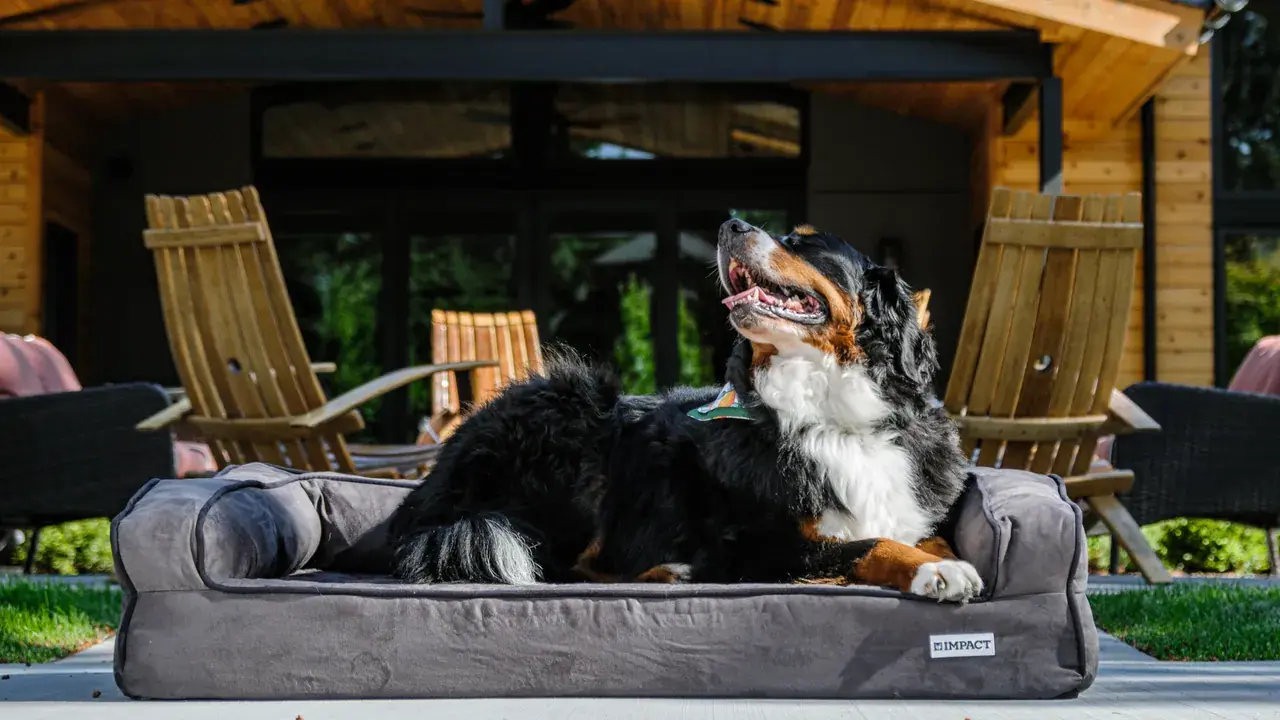
Match the bed shape to how your dog settles down to sleep. Dogs that like to curl against an edge may prefer a design with raised sides, while dogs that stretch out may find an open mat or flat cushion easier to use. A sofa-style shape can offer a defined lounging area, but check the listed dimensions and the height of its sides to see whether it suits your dog.
Observe your dog’s usual resting posture and note whether they change positions often. If they have trouble getting onto or off a bed, or you notice new discomfort or mobility changes, ask a veterinarian for guidance rather than treating a bed as a solution. A bed can provide a resting place, but it does not diagnose or treat a health condition.
Check cleaning details before choosing a large-dog bed
Choose a bed with care instructions you can follow consistently. Large beds can be awkward to wash or dry, so check whether the cover is removable and whether the listing provides washing and drying directions. If only part of the bed can be cleaned, consider how you would handle routine dirt, loose hair, or a spill on the other components.
Do not assume that “washable” means every part of the bed can go in a washing machine. Confirm which pieces are washable and follow the maker’s instructions to help preserve the bed’s shape and construction. A washable cover may be convenient, but it does not guarantee that every stain or odor will come out. Choose a care routine that fits your household and the product’s stated limits.
Avoid common sizing and placement mistakes
Leave enough clearance around the bed for your dog to enter, turn, and settle comfortably. A bed that fits the dog but blocks a doorway or sits on a slippery surface may be inconvenient in daily use. Before buying, measure the floor space where the bed will go and compare it with the bed’s outside dimensions as well as its sleeping area.
Also check the bed’s base and the maker’s guidance for intended use. Place it away from heaters, open flames, and areas where it could obstruct a walkway. Inspect seams and closures periodically, especially if your dog tends to chew or pull at bedding; no bed should be assumed chew-proof. Replace or stop using a bed if damaged parts could create a safety concern.

Use this comparison to identify which details to check for your dog’s sleep style.
| Bed style | May suit | Check before buying |
|---|---|---|
| Open mat or cushion | Dogs that stretch out | Usable sleeping surface and thickness details |
| Round or oval bed | Dogs that curl up | Inner sleeping area, not just outside width |
| Bolster or sofa-style bed | Dogs that rest against an edge | Side height and the space left for sleeping |
| Elevated bed | Homes where airflow beneath the bed is useful | Listed dimensions, frame details, and intended placement |
Frequently asked questions
Should I size up if my dog is between two bed sizes?
Compare the usable sleeping area of both sizes with your dog’s measurements and sleeping posture. If your dog stretches out, the smaller option may leave too little room even if it matches a size chart. Check the maker’s guidance and the bed’s outside dimensions too, especially if floor space is limited.
Can one large dog bed comfortably fit two dogs?
That depends on both dogs’ size, sleeping habits, and willingness to share space. Measure the combined area they use when resting together and consider whether each can settle without pushing the other off. Separate beds may be more suitable if either dog guards resting spots or prefers room to itself.
What should I check if my dog chews bedding?
Look for clear construction and care information, and inspect the bed regularly for loose seams, exposed filling, or damaged parts. No bed should be treated as chew-proof. Remove a damaged bed if it could create a safety risk, and ask a veterinarian or qualified behavior professional for help with persistent chewing.
When should I ask a veterinarian about my dog’s sleeping comfort?
Contact a veterinarian if your dog develops new difficulty lying down, getting up, changing position, or settling comfortably. A bed can offer a resting surface, but it cannot identify the cause of discomfort or treat a medical condition. Seek guidance before relying on a product to address a health concern.
How this guide was made: it was prepared with AI assistance as general shopping and care information. It is not a hands-on product test or veterinary advice. Brand and retailer names belong to their owners; check their current listings for details.