
Dog Crate Bed: How to Choose the Right Fit

Quick answer: dog crate bed
A dog crate bed should fit the crate floor without bunching, blocking the door, or preventing the crate from closing. Measure the interior space, then compare it with the bed’s listed dimensions. Consider your dog’s sleeping position, chewing habits, and the care instructions before choosing a thickness or style.
A comfortable crate setup starts with a bed that fits the space and works for the dog using it. A thick cushion may suit a dog who likes padding, while a simpler mat can leave more room to move.
Check the bed’s dimensions against the crate’s interior—not just its label—and read the care and use details on the current product listing. No bed is suitable for every dog or every crate setup.
Key points
- Measure the crate’s usable interior floor space.
- Match the bed shape and thickness to your dog’s habits.
- Check cleaning instructions before buying.
- Remove bedding that becomes damaged or unsafe.
In this guide
- Searching “bed crate dog”? Start with the likely intent
- What to check in a kennel bed for dogs: materials and care
- Measure first when choosing a dog bed for crate use
- Compare dog beds for crates by shape and sleep style
- Crate bedding safety: inspect fit and condition
- Using one bed in a crate and beside the sofa
- Quick checks for matching a bed to a crate setup
- Frequently asked questions
Searching “bed crate dog”? Start with the likely intent
This search most likely means a dog owner wants a bed to place inside a crate.
Because the phrase is out of standard word order, it could also refer to a crate-style bed or a dog bed used near a crate. Check the product description and photos to confirm which setup it is made for. For a bed that goes inside a wire or plastic crate, prioritize a flat shape that fits the floor and does not interfere with the door or latch. For a furniture-style crate, check the bed’s listed dimensions against the interior sleeping area. Don’t assume that a bed labeled “crate” fits every crate size; compare measurements and note whether the listed dimensions describe the bed itself or the space it is designed to fit.

What to check in a kennel bed for dogs: materials and care
A kennel bed for dogs should have materials and care instructions that suit your household’s cleaning routine.
Look for clear information about the cover, filling, and whether any components can be removed for washing. Follow the maker’s care label; washing a bed in a way the label does not allow may damage its shape or construction. If your dog tracks in dirt or sheds heavily, a removable cover may make regular cleanup more manageable. Check how the base is described, too: some beds are designed to add cushioning, while others are thinner mats that leave more room inside the kennel. Materials alone do not tell you how a bed will feel, so use the listing’s construction details and your dog’s preferences to guide the choice.
Measure first when choosing a dog bed for crate use
Measure the crate’s interior floor before choosing a dog bed for crate use.
Measure the usable width and length where the bed will sit, accounting for any angled corners, raised edges, or obstructions. Compare those figures with the bed’s actual listed dimensions, and leave enough clearance for the crate door to close freely. A bed that is too large can fold or bunch; one that is too small may slide around and leave much of the floor uncovered. Consider thickness as well as length and width, because a lofty cushion can reduce headroom in a crate with a low roof. If your dog stretches out to sleep, check that the bed accommodates that position rather than relying only on your dog’s standing measurements.
Compare dog beds for crates by shape and sleep style
Compare dog beds for crates by how much usable floor space and support each shape leaves.
A flat mat keeps the sleeping surface simple and may suit dogs who prefer to stretch out. A cushion adds loft, but takes up more room; bolstered sides may appeal to dogs who like a boundary, while also reducing the open area. Look at your dog’s usual resting position and whether they shift around before settling. For a crate used during travel, consider whether the bed can be removed and packed separately, and check that it stays in place without obstructing safe crate use. Avoid choosing by appearance alone: confirm dimensions, construction, and care details on the current listing before deciding.
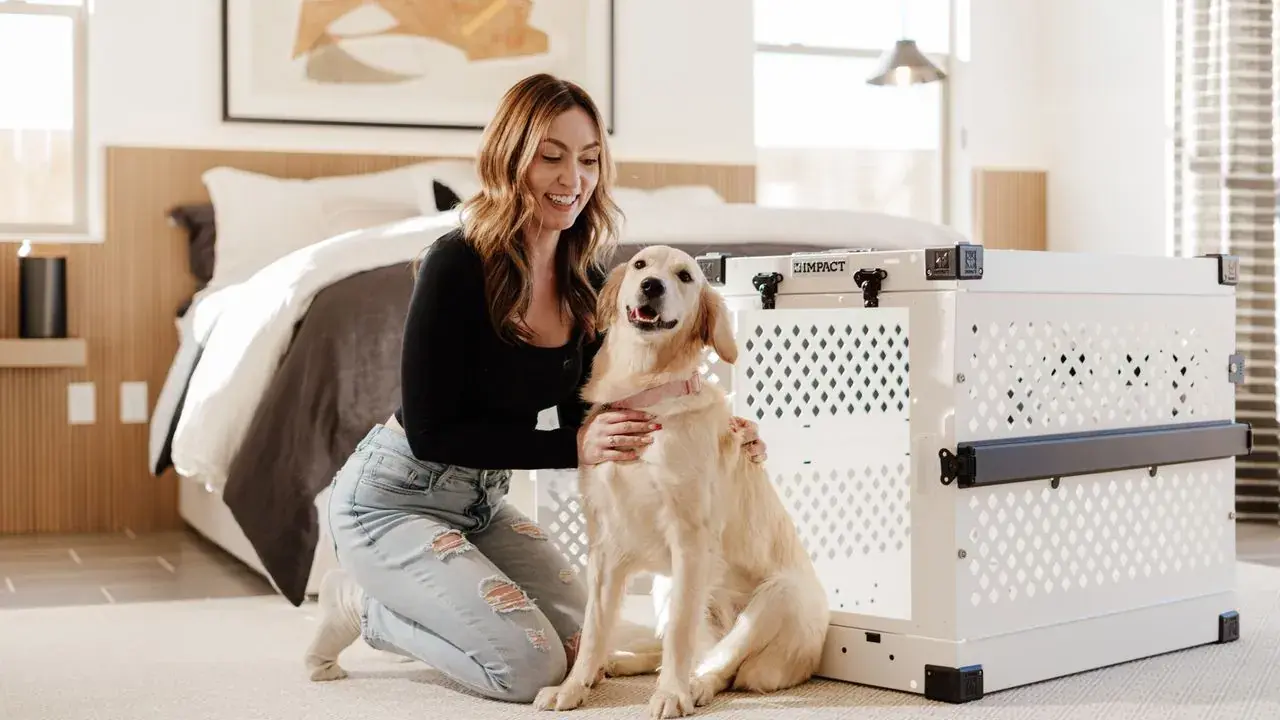
Crate bedding safety: inspect fit and condition
Check crate bedding regularly and remove it if damage creates a safety concern.
Some dogs chew, shred, or pull at bedding, so observe how your dog behaves with a new bed rather than assuming any style will be suitable. Loose fabric, exposed filling, or damaged seams may create hazards if a dog mouths or swallows pieces. Choose a bed that does not block ventilation, prevent the crate door from closing, or interfere with a divider or latch. For puppies still learning to settle, use bedding only if it is appropriate for that puppy’s behavior and supervision plan. Ask a veterinarian for guidance if chewing is persistent or if your dog may have swallowed bedding; seek prompt veterinary advice if you suspect an obstruction or other urgent problem.
Using one bed in a crate and beside the sofa
A bed used in both a crate and a living area needs to fit each location independently.
A compact mat may move easily between spaces, while a sofa-style cushion may be too bulky for many crate interiors. Measure both the crate floor and the intended spot beside the sofa, then check the bed’s dimensions and shape against each. Consider whether moving it often will make cleaning or storage harder, and whether the cover can be cared for as directed. A familiar resting surface can help keep a home routine consistent, but the bed should not be forced into a crate that is too small for it. If a separate sofa bed fits your space better, treat it as a distinct sleeping area rather than assuming one bed has to serve both purposes.

Quick checks for matching a bed to a crate setup
| Check | Why it matters | What to verify |
|---|---|---|
| Interior measurements | Helps prevent a poor fit | Usable floor width and length |
| Bed shape and thickness | Affects open space and resting room | Listed dimensions and your dog’s sleep position |
| Care details | Guides routine cleaning | Whether components are removable and how they can be washed |
| Condition and behavior | Helps identify potential hazards | Chewing, loose parts, damaged seams, and fit around the door |
Frequently asked questions
Should a dog sleep in a crate with a bed?
Some dogs settle comfortably with bedding, while others may chew or move it around. Consider your dog’s behavior, the crate’s usable space, and whether the bed can remain in place without blocking the door or ventilation. If you are unsure what is appropriate for your dog, ask your veterinarian.
Can I use a crate bed for a puppy?
A puppy may use bedding if it fits safely and the puppy does not chew or swallow pieces. Monitor how the puppy interacts with it, especially at first, and remove damaged bedding. If chewing is persistent or you think your puppy swallowed material, contact a veterinarian for advice.
How often should crate bedding be washed?
There is no single schedule that suits every dog or household. Clean bedding when it is soiled or has an odor, and follow the product’s care instructions. Regularly check beneath the bed and inside seams for trapped dirt, moisture, or damage.
What if my dog keeps pushing the bed out of the crate?
Your dog may be shifting the bed to make room, seeking a cooler or firmer surface, or playing with it. Check that the bed fits and does not bunch. If the behavior is new or comes with signs of discomfort, ask your veterinarian whether an underlying issue could be involved.
How this guide was made: it was prepared with AI assistance as general shopping and care information. It is not a hands-on product test or veterinary advice. Brand and retailer names belong to their owners; check their current listings for details.