
How to Choose a Dog Bed That Fits Your Dog

Quick answer: dog bed
Choose a dog bed that lets your dog rest in their usual position, suits the place where it will go, and has care instructions you can follow. Measure your dog while they are relaxed, compare those measurements with the maker’s sizing guide, and check the bed’s fill, cover, entry height, and safety details before buying.
A comfortable bed starts with your dog’s habits, not a particular shape or label. Notice whether your dog curls up, stretches out, leans against an edge, or changes positions during rest.
Then consider where the bed will sit, how easily it can be cleaned, and whether your dog can get in and out comfortably. Product details vary, so check the current listing and care label for the specific bed.
Key points
- Measure your dog in a relaxed sleeping position and consult the bed’s sizing guide.
- Choose a shape and fill that suit your dog’s preferred sleeping posture.
- Check cleaning instructions, cover details, and construction before buying.
- Ask a veterinarian about new discomfort, mobility changes, or persistent sleep problems.
In this guide
- Dog beds: start with the right size
- Searching dog beds dog beds? Compare listings carefully
- Searching bed of dog? Clarify the likely meaning
- Dog bed for bed: choosing a bed to place on yours
- Dog beds for dogs at different life stages
- Searching thuma classic dog bed? Verify the current listing
- Bed for the dog: choose a practical spot
- Beds for a dog: decide whether one or more make sense
- Bed for dogs: understand materials and care labels
- Beds for dogs: compare the main styles
- Common dog-bed styles and details to verify
- Frequently asked questions
Dog beds: start with the right size
Choose dog beds with enough room for your dog to rest in their usual position. Measure from nose to the base of the tail while your dog is stretched out, and measure their curled sleeping shape too if they often curl up. Compare the measurements with the maker’s sizing guide rather than relying on labels such as small or large, which can vary between products.
Consider the bed’s usable sleeping area, not only its outside dimensions. Raised bolsters, deep walls, or a thick rim can reduce the flat space available. If your dog is still growing, check the product listing for its dimensions and consider how much room your dog may need as they grow. A bed that is too small may discourage your dog from using it, while an oversized bed may take up more floor space than you planned.

Searching dog beds dog beds? Compare listings carefully
The repeated phrase dog beds dog beds most likely means a shopper wants to browse or compare dog-bed options. It does not identify a specific feature, so use the product details to make a useful comparison instead of relying on repeated words in a title.
For each listing, note the bed’s dimensions, shape, fill or support description, cover construction, and cleaning instructions. Check whether the listed size refers to the whole bed or the sleeping surface. Look for clear photos of seams, openings, and the bottom, and confirm any claims about water resistance or removable parts in the current listing. If an important detail is missing, contact the seller or maker before ordering. Comparing the same details across a few options can reveal which bed fits your space and routine without assuming that similar names mean similar construction.
Searching bed of dog? Clarify the likely meaning
The phrase bed of dog is ambiguous; it most likely means a bed for a dog. If that is what you are looking for, first think about where your dog rests and what kind of surface they appear to prefer.
A dog who curls into a small space may settle into a nest-like or bolster shape, while a dog who sprawls may need a broad, open surface. These are shopping considerations, not guarantees about what any individual dog will prefer. If you are looking for a bed featuring a dog design rather than a bed for a dog, check the item description and images to confirm what the product actually is. For either interpretation, verify dimensions, materials, and care directions on the current listing. Avoid assuming that a decorative name tells you how supportive, washable, or durable a bed will be.
Dog bed for bed: choosing a bed to place on yours
A dog bed for bed most likely means a smaller dog bed intended to sit on a human bed. Before choosing one, consider the available surface, the bed’s grip, and whether it could shift when your dog steps on or off.
Check the product dimensions against the space you can spare, including room for people to sleep. A bed with a non-slip bottom may be worth considering, but verify the maker’s description and do not assume it will stay put on every fabric. Think about how you will lift and wash it, and whether the bed’s edges could become a tripping obstacle. If your dog has trouble jumping, avoid making a high bed the only resting option; ask your veterinarian about mobility changes or safe access. A separate floor-level bed can give your dog another place to rest.
Dog beds for dogs at different life stages
Dog beds for dogs should suit the individual dog’s movement, habits, and ability to get in and out. Puppies may mouth bedding, so inspect seams and loose parts regularly and choose a design whose care and safety details you can verify. A bed is not guaranteed to withstand chewing.
For an older dog or one with limited mobility, consider a lower entry and a stable resting surface. A product described as orthopedic may use that term to describe its design, but it should not be treated as a medical treatment or promise of pain relief. Ask a veterinarian if your dog shows new stiffness, discomfort, or difficulty rising. For a growing dog, recheck the fit over time. Across life stages, follow the maker’s guidance and remove a bed if damaged parts could pose a risk.
Searching thuma classic dog bed? Verify the current listing
The words thuma classic dog bed appear to refer to a named product or a search for one; the name alone indicates a dog bed described as classic. SoftDogBeds does not sell Thuma products and is not affiliated with Thuma.
For current information, check the maker’s or retailer’s listing directly. Verify the actual dimensions, construction, materials, cover details, cleaning directions, and any stated care or warranty terms rather than inferring them from the product name. Confirm whether the bed’s size and shape suit your dog and the spot where you plan to place it. Product details can change, and this guide does not confirm current availability or specifications. If the listing leaves a detail unclear, ask the seller or maker before making a decision.

Bed for the dog: choose a practical spot
The best spot for a bed for the dog is a place your dog can reach and where the household can keep the bed clean and undisturbed. Consider whether your dog seeks a quiet corner, prefers being near people, or moves between rooms during the day.
Keep the bed away from doorways and busy paths where it could be stepped on or pushed aside. Avoid placing it next to a heat source or in a drafty, damp area; choose a location with comfortable conditions for your home and dog. If you want a bed for more than one room, check whether its size and weight make it practical to move. Observe how your dog uses the spot after placement. If the bed is repeatedly avoided, the location, shape, or surface may not suit them.
Beds for a dog: decide whether one or more make sense
Beds for a dog can mean one bed or several resting places, depending on your home and routine. One well-placed bed may be enough for a dog who spends most of the day in one room. A second option can be useful if your dog regularly rests in different parts of the home or needs a quiet place away from activity.
Before adding another bed, consider whether each location is safe, accessible, and easy to keep clean. Multiple beds do not need to be identical: one might fit a living area and another a calmer sleeping space. Keep track of which locations your dog actually uses. That can help you decide whether a new bed fills a real need or simply takes up space. If other animals share the home, provide resting areas where each pet can settle without being crowded.
Bed for dogs: understand materials and care labels
A bed for dogs is easier to maintain when its materials and cleaning instructions fit your household routine. Before purchase, find out whether the cover is removable, what cleaning method the maker allows, and whether the inner fill has separate care directions.
Do not assume that a removable cover means the whole bed is washable or that a fabric is stain-resistant. Follow the care label to help avoid damage, and let washed parts dry fully before putting the bed back together. If your dog sheds heavily, a cover that can be removed for routine cleaning may be practical. For outdoor use, check the listing for its intended conditions and care guidance; do not assume the bed is waterproof. Inspect seams and closures periodically, and stop using the bed if damage creates a safety concern.
Beds for dogs: compare the main styles
Beds for dogs come in different styles, and the right type depends on where it will be used and how your dog rests. Plush beds offer a soft surface; calming or nest-style beds have raised edges; orthopedic beds are marketed around support; and outdoor or cooling styles are designed with different settings or comfort needs in mind.
These category names do not guarantee a particular material, temperature effect, or health benefit. Read the product details to understand what each bed is made from, how high it sits, and whether it is intended for indoor or outdoor use. For a dog who likes to lean, edges may appeal; a sprawler may need more open space. For warm weather, provide shade and fresh water as well as a suitable resting surface. Ask a veterinarian about health concerns rather than relying on a bed to treat them.
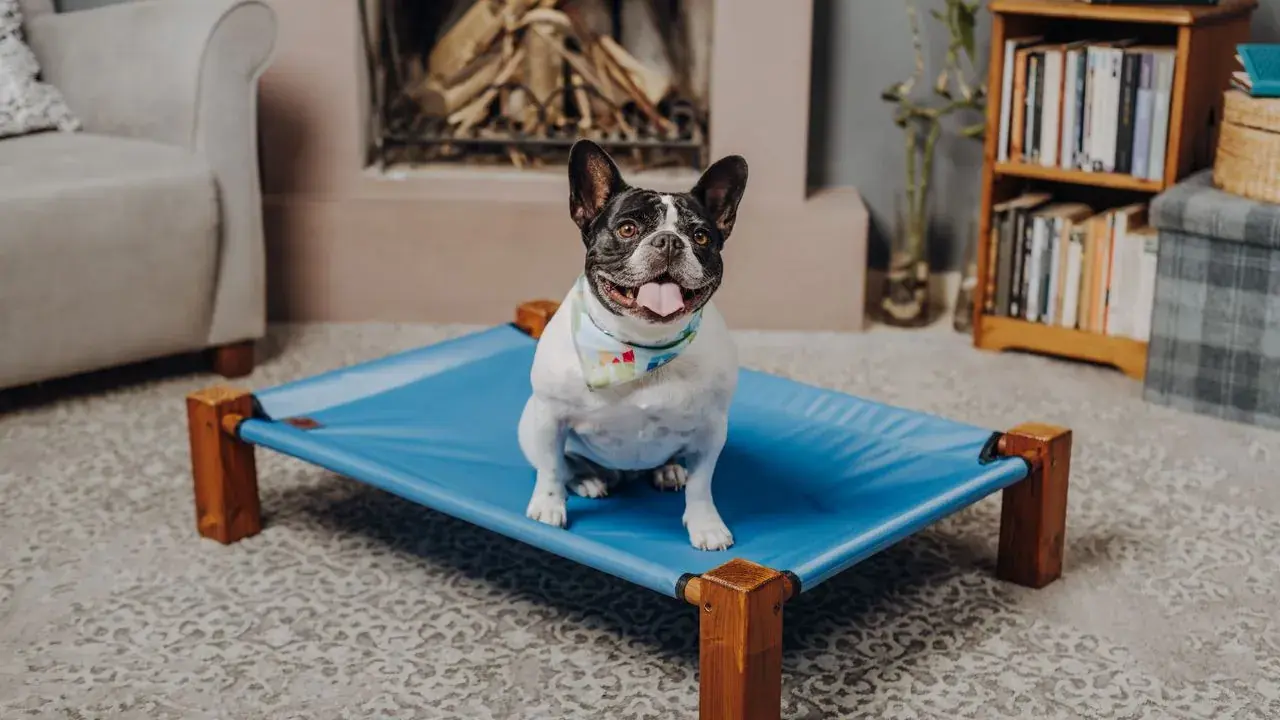
Common dog-bed styles and details to verify
| Style | May suit | Check before buying |
|---|---|---|
| Plush | Dogs who prefer a soft surface | Fill, cover care, and usable sleeping area |
| Calming or nest-style | Dogs who like to curl or lean against an edge | Interior space and edge height |
| Orthopedic | Shoppers comparing beds marketed around support | Construction details; do not treat it as medical care |
| Outdoor or cooling | Resting areas outside or warmer settings | Intended use, care directions, and stated materials |
Frequently asked questions
How can I help my dog get used to a new bed?
Place the bed in a familiar, comfortable area and let your dog explore it at their own pace. You can offer a favorite toy nearby, provided it is safe for your dog. Avoid forcing your dog to lie down. If they consistently avoid the bed, reconsider its location, size, or surface.
How often should a dog bed be cleaned?
Follow the maker’s care label, since cleaning methods differ by bed and material. Remove loose hair and debris as needed, and wash removable parts according to their instructions. Clean promptly after spills or soiling, and allow the bed to dry fully before your dog uses it again.
Can a dog bed help with joint pain?
A bed may provide a comfortable place to rest, but it cannot diagnose or treat joint pain. If your dog shows stiffness, limping, trouble standing, or a change in activity, contact a veterinarian for advice. Ask about suitable resting arrangements as part of that conversation.
What should I do if my dog chews their bed?
Remove a damaged bed if loose pieces, torn fabric, or exposed fill could be swallowed or cause injury. A bed is not guaranteed to resist chewing. Consider supervised alternatives and discuss persistent chewing or sudden behavior changes with a veterinarian, especially if your dog may have swallowed part of the bed.
How this guide was made: it was prepared with AI assistance as general shopping and care information. It is not a hands-on product test or veterinary advice. Brand and retailer names belong to their owners; check their current listings for details.