
Dog nail bed infection: signs, causes, and next steps

Quick answer: dog nail bed infection
A dog nail bed infection can cause redness, swelling, tenderness, discharge, odor, or limping, but these signs can also follow an injury or another problem. Contact a veterinarian for an examination, especially if symptoms worsen or your dog seems very uncomfortable. Heavy bleeding, a badly torn nail, or marked weakness warrants urgent veterinary care.
Changes around a dog’s nail can be painful and may have several causes, including infection or injury. Signs alone cannot confirm what is wrong, so a veterinarian is the right person to assess a sore or changing nail.
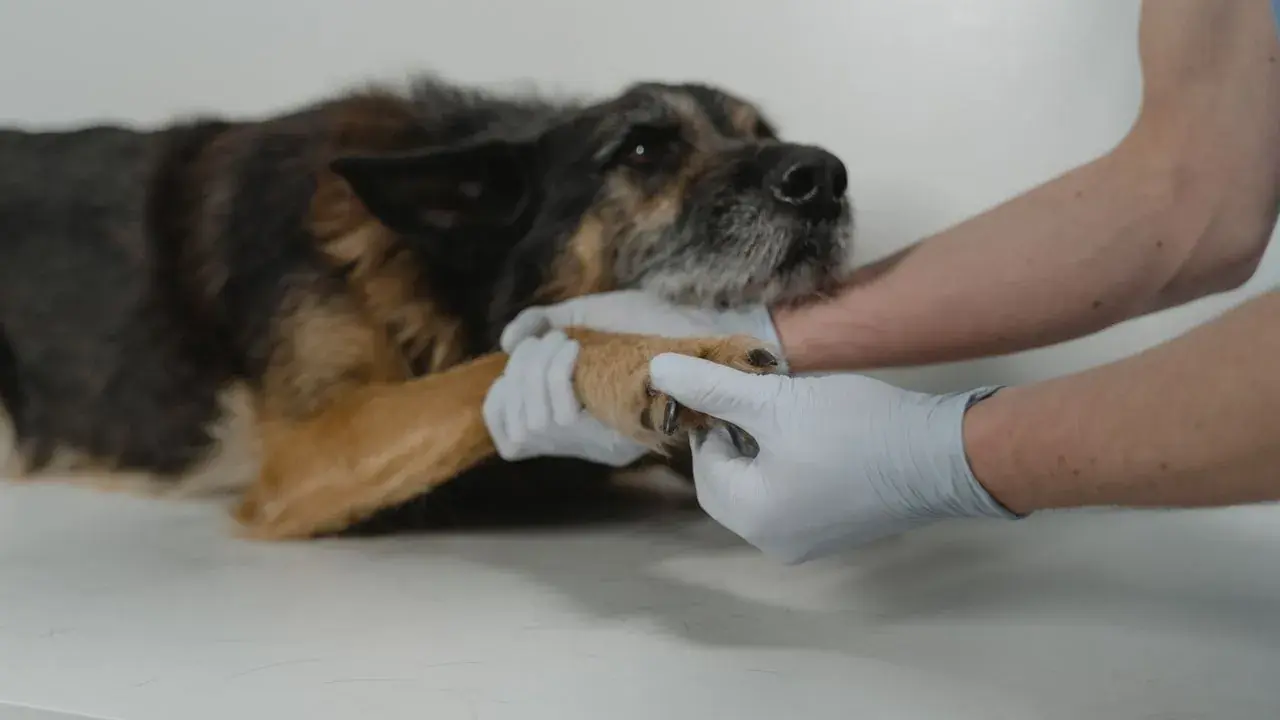
Check the paw gently without squeezing or pulling at the nail. If your dog resists, seems very painful, or the nail is badly damaged, stop handling it and call a veterinary clinic for guidance.
Key points
- Redness, swelling, discharge, odor, or limping deserve attention.
- Bleeding may come from a torn nail or exposed quick.
- Do not pull a damaged nail or give human pain medicine.
- Contact a veterinarian if signs worsen or bleeding persists.
In this guide
- Dog nail bed infection: signs that need veterinary care
- Searching “dogs nail bed bleeding”? What it may mean
- Why a nail or the surrounding skin may become sore
- What a veterinarian may check and recommend
- Reducing the chance of repeat nail problems
- Paw and nail signs and a sensible next step
- Frequently asked questions
Dog nail bed infection: signs that need veterinary care
A dog nail bed infection may cause redness, swelling, warmth, tenderness, discharge, an unusual odor, or reluctance to put weight on the paw. These signs can also occur with a torn nail, a foreign object, or another paw problem, so appearance alone cannot confirm infection.
Arrange veterinary care if the area is getting worse, your dog is limping, or the paw is painful to touch. Seek urgent help for heavy bleeding, a nail torn near its base, severe pain, or your dog appearing weak or unwell. Avoid digging into the nail fold or squeezing the area to look for a cause; that can increase discomfort and irritation. If you are unsure how quickly your dog needs care, call a veterinary clinic and describe the signs.
Searching “dogs nail bed bleeding”? What it may mean
“Dogs nail bed bleeding” most likely refers to blood from a dog’s nail or the sensitive quick inside it, often after a nail is clipped too short or torn. If the bleeding is minor, hold clean gauze or a clean cloth gently against the nail with steady pressure. Avoid repeatedly lifting it to check, since that can disturb a forming clot.
Call a veterinarian if bleeding does not stop with steady pressure, starts again, or comes from a nail that is split or torn close to the paw. Do not pull off a hanging nail fragment, apply household chemicals, or give human medication. A clinic can advise whether the injury needs prompt examination based on how it happened and how your dog is acting.
Why a nail or the surrounding skin may become sore
A sore nail area can follow a snag, a clipping injury, repeated licking, or something lodged beside the nail; infection is only one possibility. Nail problems can also be associated with skin irritation or other health issues, which is why a recurring or persistent change merits veterinary attention.
Note when you first noticed the problem, which paw is affected, and whether there was a recent walk, nail trim, or visible injury. If more than one nail is affected or the problem keeps returning, share that pattern with the veterinarian rather than treating each episode as an isolated cut. Do not try to remove a deeply embedded object or trim a painful, damaged nail at home. Gentle observation can help, but it cannot replace an examination when symptoms continue.
What a veterinarian may check and recommend
A veterinarian can examine the nail, surrounding skin, and paw to look for injury, infection, or another cause of discomfort. Depending on the findings, the clinic may recommend cleaning or trimming damaged nail material, additional testing, or medication; the right plan depends on the individual dog and the examination.
Be ready to describe when the signs began, any known injury, and changes in walking, licking, appetite, or energy. Follow the clinic’s instructions for any prescribed treatment, and ask before applying creams or cleaning products. If your dog is difficult to handle because of pain, do not force a close inspection. Tell the clinic so staff can advise you on a safe way to bring your dog in.

Reducing the chance of repeat nail problems
Regular, cautious nail care and quick attention to snags can help reduce preventable nail injuries. Trim only small amounts at a time if you know how to do so safely, and ask a veterinarian or qualified groomer to demonstrate if you are unsure where the quick is. Keep an eye on nails that regularly catch on carpets or outdoor surfaces.
After walks, check paws for visible debris without probing under the nail. Discourage persistent licking by asking your veterinarian what is appropriate, particularly if the skin is raw or the nail is damaged. Keep your dog’s resting area clean and dry, but do not rely on bedding or home cleaning to treat a nail problem. Recurring soreness, unusual nail changes, or repeated bleeding should be discussed with a veterinarian.
Paw and nail signs and a sensible next step
| What you notice | Possible concern | Next step |
|---|---|---|
| Redness, swelling, or discharge | Infection or irritation | Contact a veterinarian for assessment |
| Blood after a clip or snag | Injury to the nail or quick | Apply gentle pressure; call if bleeding persists |
| Limping or strong sensitivity | Painful nail or paw injury | Arrange veterinary advice promptly |
| Repeated changes in several nails | A recurring or broader problem | Share the pattern with your veterinarian |
Frequently asked questions
Can a dog’s nail problem clear up without treatment?
A minor nail injury may stop bleeding, but you cannot tell from appearance alone whether infection or deeper damage is present. If redness, swelling, discharge, pain, or limping persists or worsens, contact a veterinarian rather than waiting for it to resolve.
Should I let my dog lick a sore nail?
Try to prevent persistent licking, which can further irritate the area. Ask a veterinarian what approach is suitable for your dog and the specific injury. If licking is intense or the skin is becoming raw, seek veterinary advice instead of applying an unapproved product.
Can I use human pain medicine for nail pain?
Do not give human pain medicine unless a veterinarian specifically instructs you to. Some medicines intended for people can be dangerous for dogs, and the appropriate response depends on the dog and the cause of the pain. Call a veterinary clinic for guidance.
How should I prepare for a veterinary visit about a sore nail?
Note when the problem began, any recent injury or nail trim, and whether your dog is limping or licking the paw. A clear photo may help show how the area has changed, but do not delay care to take one if your dog is in significant pain.
How this guide was made: it was prepared with AI assistance as general shopping and care information. It is not a hands-on product test or veterinary advice. Brand and retailer names belong to their owners; check their current listings for details.